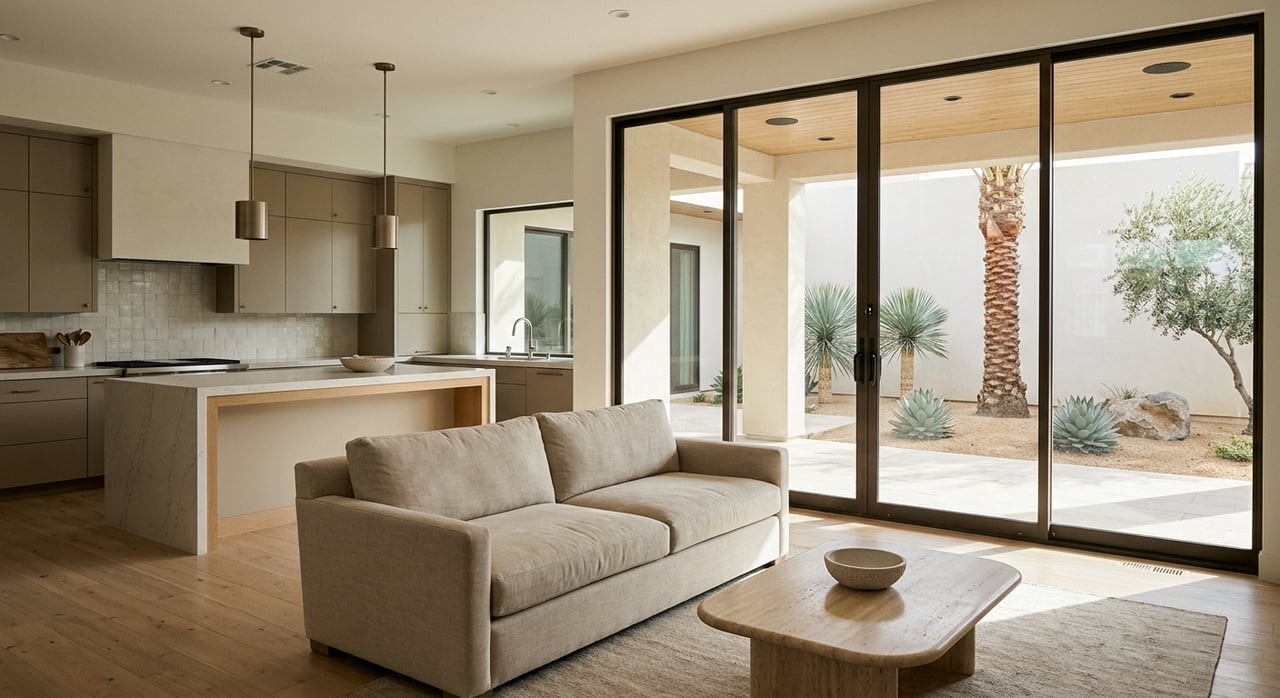
If you are comparing villas versus estates in the Arizona Biltmore, the biggest difference is not just price or square footage. It is how you want to live day to day. Some buyers want a lock-and-leave home with more shared maintenance, while others want land, privacy, and more control over the property. If you are weighing both paths, this guide will help you understand the trade-offs and make a more confident decision. Let’s dive in.
What makes the Biltmore unique
The Arizona Biltmore has been a Phoenix landmark since 1929, and the City of Phoenix describes it as a 39-acre resort setting at the foot of Piestewa Peak. The broader Camelback East area is known for a mix of housing types and a planned, resort-living feel shaped in part by major hospitality destinations.
For buyers, that setting matters because the Biltmore is not one single neighborhood with one ownership style. ABEVA serves as the master homeowners association for residential and certain commercial properties in the area, and it says there are 17 separate residential communities, each with its own sub-association.
That layered structure helps explain why two homes in the Biltmore can offer very different ownership experiences. You are not only buying a location. You are also buying into a specific community structure, maintenance model, and set of governing documents.
Why “villa” can mean different things
One of the most important things to know is that the word villa does not describe one fixed property type in the Arizona Biltmore. In this market, a villa can refer to a single-family home in one community, while in another part of the Biltmore it can refer to a condominium development.
That difference matters because ownership rights, maintenance responsibilities, dues, and rental rules can change a lot from one property to another. In other words, you should not assume two homes offer the same lifestyle just because both use the word villa.
The safest approach is to verify the recorded subdivision, legal property type, and governing documents before you make decisions. In the Biltmore, labels can be helpful for marketing, but the real ownership picture is found in the paperwork.
Villas versus estates at a glance
If you want a simple way to compare the two, start with responsibility, privacy, and flexibility. Villas often appeal to buyers who want convenience and less hands-on upkeep, while estates often appeal to buyers who want more room and more direct control.
| Feature | Villas | Estates |
|---|---|---|
| Ownership style | Can be condo or single-family, depending on community | Typically single-family estate homes |
| Maintenance | Often includes more shared or HOA-managed elements | More owner responsibility overall |
| Privacy | Usually less land and closer proximity to neighbors | Usually more land, separation, and privacy |
| Lifestyle | Often suited for lock-and-leave living | Often suited for long-term, customized living |
| Amenities | May feel more connected to resort-style amenities | More focused on private space and flexibility |
| HOA costs | Can range widely by subcommunity | Varies by community and property setup |
This is why your best fit often comes down to how much maintenance you want to own versus how much convenience you want built into the property. Neither option is better across the board. The right choice depends on your goals.
What villa ownership may look like
In the Biltmore, villa ownership can vary from a smaller single-family home to a condominium tied more closely to association rules and shared systems. Current market snapshots cited in the research show Biltmore Villas as a single-family home community with homes around 1,513 to 2,256 square feet and HOA fees around $300 to $350 per month.
By contrast, Arizona Biltmore Hotel Villas Condominiums are described in court records as a 78-condominium development near the hotel. Market snapshots cited in the research place those homes around 1,415 to 1,628 square feet, with HOA fees ranging from $1,017 to $3,550 per month.
That spread is a major buyer consideration. Two villa properties may look similar on a search page, but their carrying costs and ownership rules can be very different once you dig deeper.
What estate ownership may look like
At the estate level, buyers are often paying for scale, privacy, and flexibility more than shared amenities. The research includes a current estate example in Arizona Biltmore Estates with 12,503 square feet of living area on 1.668 acres, plus an 863-square-foot guest house.
That kind of property illustrates the estate appeal clearly. You may have more outdoor space, more separation from neighbors, and more options for how you use the home over time.
For many buyers, that also means a different ownership mindset. Instead of leaning on a community to handle a larger portion of upkeep, you are often taking on more direct responsibility in exchange for greater control.
How maintenance responsibilities differ
Maintenance is often the deciding factor for buyers choosing between a villa and an estate. Under Arizona condominium law, the association is generally responsible for maintenance, repair, and replacement of common elements, while each unit owner is responsible for the unit itself.
Arizona law also gives condo associations authority to regulate the use, maintenance, repair, replacement, and modification of common elements. That means a condo-style villa may reduce some maintenance burdens, but it can also come with more structured rules around what you can change and how shared areas are managed.
With an estate, your responsibilities are often more direct. You may have more freedom over the property, but you are also more likely to manage more of the exterior, grounds, and long-term upkeep yourself.
How ABEVA and sub-associations shape ownership
The Biltmore operates more like a collection of micro-communities than one uniform neighborhood. ABEVA explains that the master structure was designed so roads and entranceways would be handled at the master level, while features such as gates, pools, tennis courts, and similar amenities would be built and maintained by the individual community associations.
Today, ABEVA says it provides common-area landscaping, streetlight maintenance, paving maintenance, and 24/7 roving patrol. Beyond that, your day-to-day ownership experience may depend heavily on the rules and services of the specific sub-association tied to the home you buy.
This is why reviewing HOA details is so important in the Biltmore. Two properties may share the same broader name, but the practical ownership experience can feel very different from one enclave to the next.
Amenities versus privacy
For some buyers, the Arizona Biltmore lifestyle is all about amenity access. The resort offers seven swimming pools, a full-service spa and salon, a fitness center, two golf courses, seven dining outlets, five retail shops, and tennis and pickleball.
That amenity mix can make certain villa or condo options feel especially appealing if you want a residence that connects closely with a resort environment. If your goal is convenience, seasonal use, or a lower-maintenance second home, that can be a strong advantage.
Estate buyers often prioritize something different. They may care more about private outdoor space, a larger homesite, guest accommodations, or the ability to shape the property around their own preferences rather than relying on shared amenities.
Rental flexibility and occasional use
If you are buying with occasional use or income potential in mind, some villa-style properties may deserve a closer look. The Arizona Court of Appeals describes the Arizona Biltmore Hotel Villas condominiums as a development where most units are used as vacation rentals under a rental pool agreement with the hotel.
That setup can make a hotel-side villa especially distinctive for buyers who want part-time use. At the same time, it also means the ownership experience may be more closely tied to association rules and the hotel relationship.
Before you move forward, confirm whether rental restrictions, rental-pool terms, use limitations, or access rules apply. In this segment of the Biltmore market, those details are not side issues. They are central to how the property functions.
Which option fits your lifestyle
If you travel often, want a lock-and-leave setup, or prefer a home with more shared maintenance built into the ownership model, a villa may be the better fit. That is especially true if you value convenience and a more service-oriented living experience.
If you want more privacy, more room to spread out, or more direct control over outdoor space and customization, an estate may suit you better. This can be especially appealing if you are planning for long-term use or want a property that feels more private and self-contained.
The right answer usually comes down to your daily habits. Think about whether you want to simplify ownership or maximize autonomy, because in the Biltmore those two paths often lead to very different homes.
Due diligence before you write an offer
Before making an offer in the Arizona Biltmore, take time to confirm exactly what you are buying. The Arizona Department of Real Estate advises buyers to review the public report, taxes and assessments, property owners association details, and CC&Rs.
That same guidance warns that CC&Rs can restrict things like landscaping, RV parking, play equipment, satellite antennas, and other amenities. In a community with layered associations and mixed property types, those details can affect both your lifestyle and your long-term costs.
Use this checklist as a starting point:
- Confirm whether the property is a condo, townhouse, or single-family home
- Review what the HOA and sub-association maintain
- Ask about monthly dues, reserves, and any special assessments
- Check for rental restrictions or rental-pool terms
- Review parking rules, access rules, and use restrictions
- Read the CC&Rs and public report carefully
A thoughtful review upfront can save you from surprises later. In the Biltmore, the ownership structure is just as important as the floor plan.
If you are trying to choose between a villa and an estate, the smartest move is to compare the ownership experience, not just the listing photos. The right home is the one that matches how you want to live, what level of maintenance you want to carry, and how much privacy or flexibility matters most to you.
For tailored guidance on Arizona Biltmore homes and estates, connect with Lauren Ellington for a confidential consultation.
FAQs
What is the difference between a villa and an estate in Arizona Biltmore?
- In the Arizona Biltmore, a villa may be a condo or a single-family home depending on the community, while an estate usually refers to a larger single-family property with more land, privacy, and owner control.
Are all Arizona Biltmore villas condominiums?
- No. The research shows that some villa-branded properties are single-family homes, while Arizona Biltmore Hotel Villas are a 78-condominium development, so you need to verify the exact legal property type.
Do Arizona Biltmore villas have higher HOA fees?
- Some do. Research cited here shows villa-related HOA costs can vary widely by subcommunity, from roughly $300 to $350 per month in one single-family villa community to about $1,017 to $3,550 per month in the hotel villa condominium community.
What does ABEVA do in Arizona Biltmore?
- ABEVA is the master homeowners association for residential and certain commercial properties in the Biltmore area, and it says it handles common-area landscaping, streetlights, paving maintenance, and 24/7 roving patrol.
What should buyers review before buying in Arizona Biltmore Estates?
- Buyers should review the public report, taxes and assessments, HOA and sub-association details, CC&Rs, rental rules, maintenance responsibilities, reserves, parking rules, and any special assessments before writing an offer.